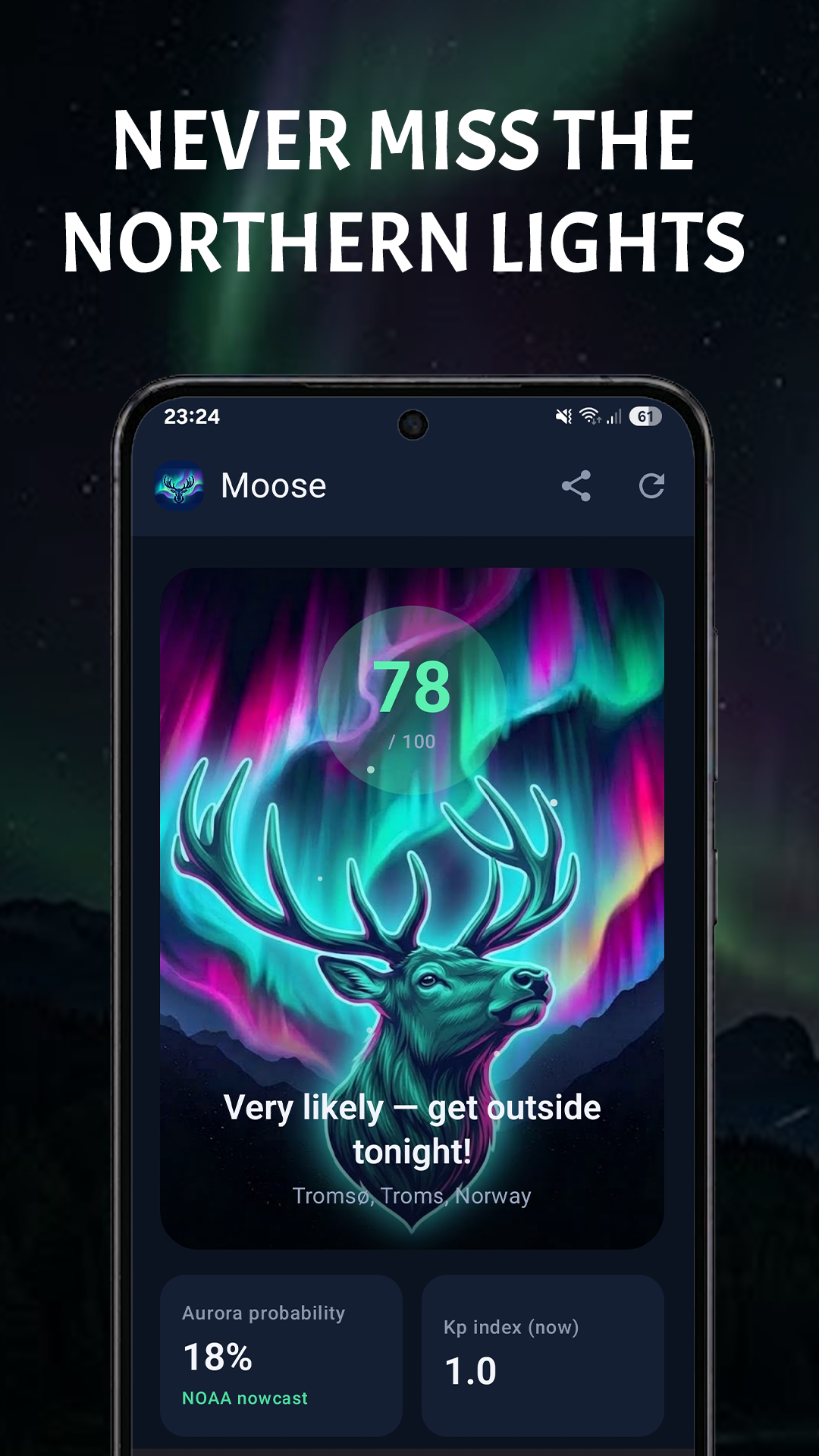
Sky score
78/100
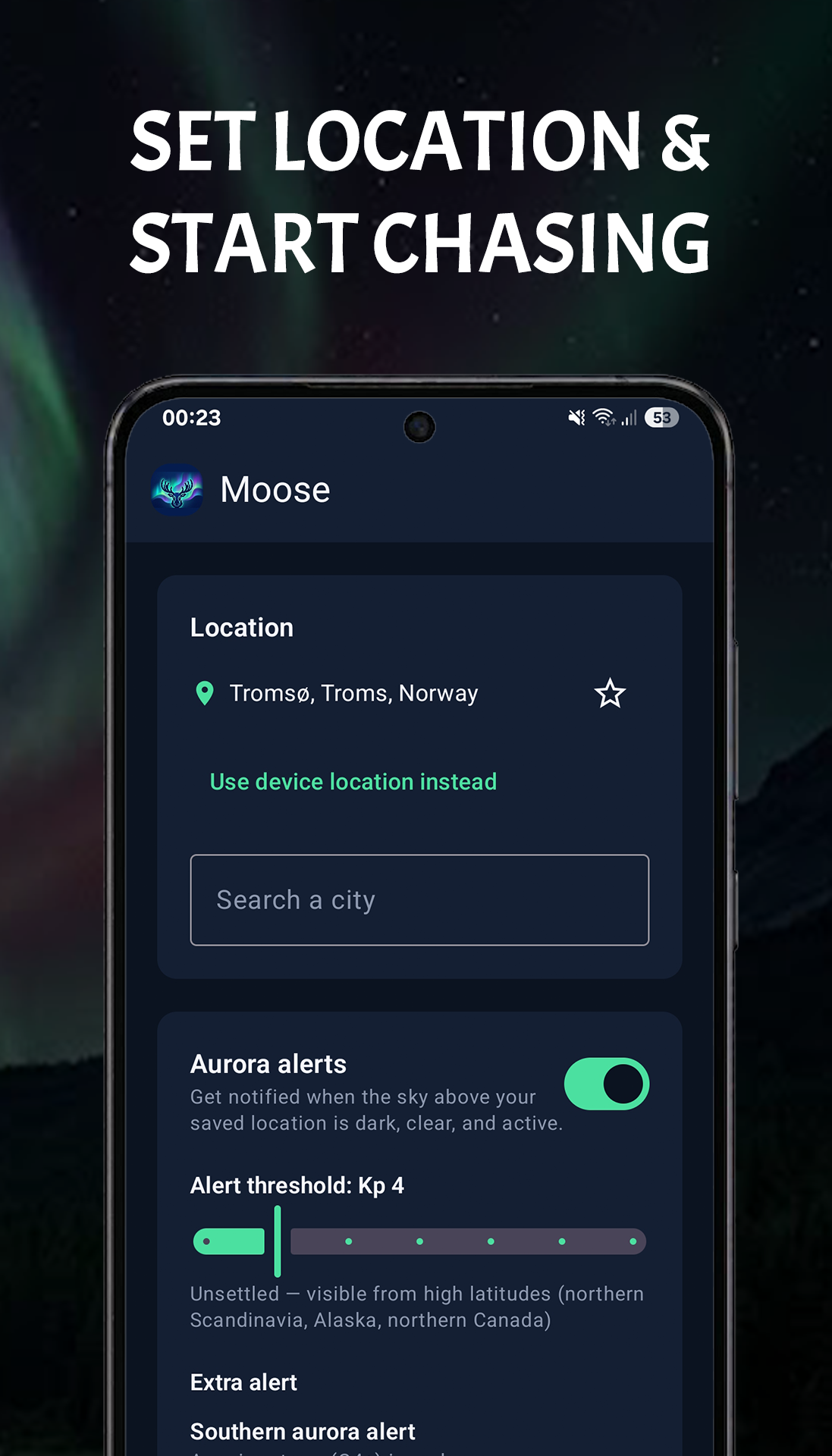
Moose watches Kp, Bz, solar wind, cloud cover, and moonlight for your exact location — and only wakes you up when the sky actually has something to show you.
Every reading comes from the same public feeds professional space-weather forecasters use — Moose just decides, second by second, whether it's worth putting your boots on.
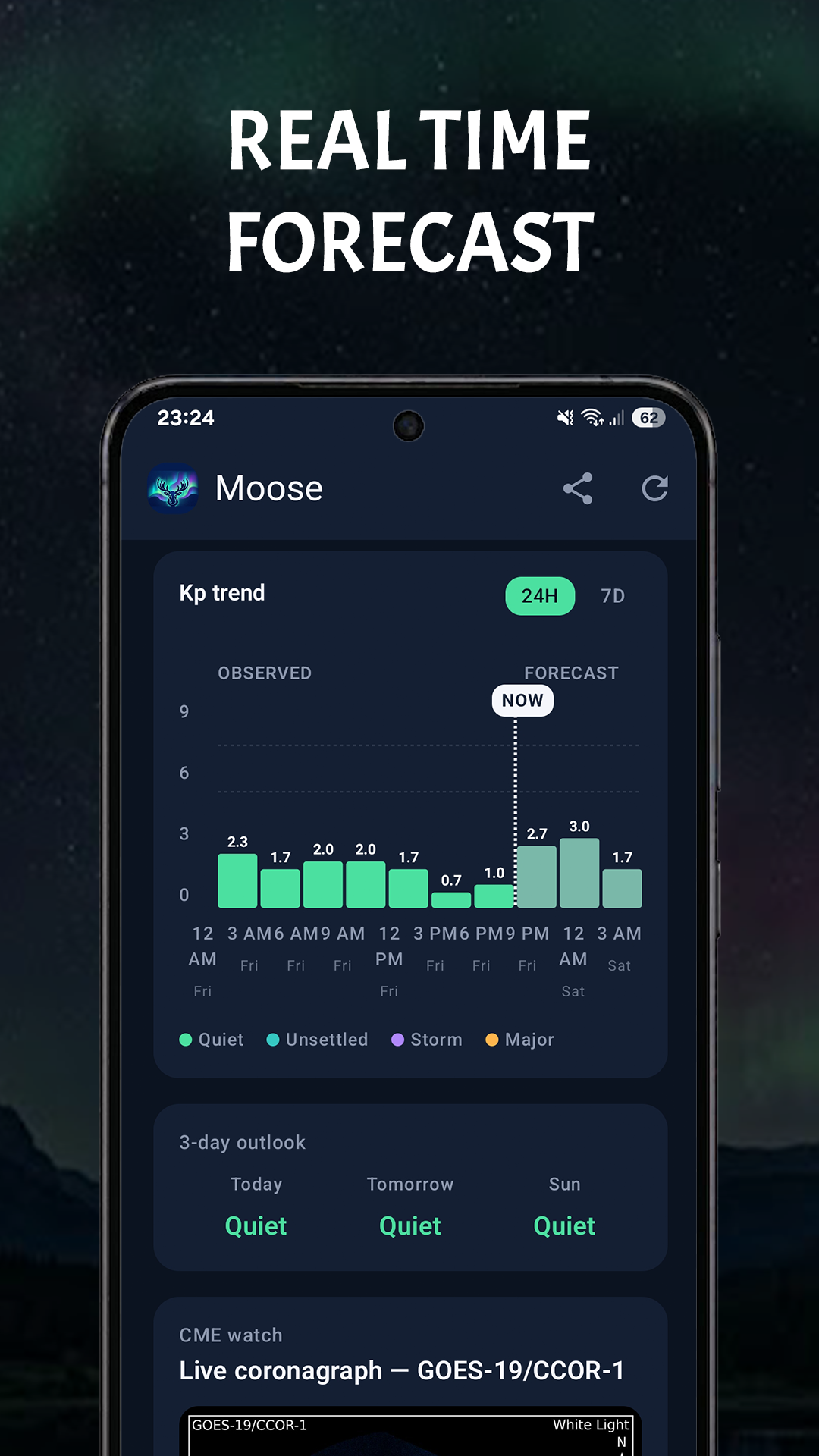
Live Kp index, interplanetary magnetic field (Bz), and solar wind speed, each with its own trend chart — so you can see a southward Bz turn before Kp has even caught up.
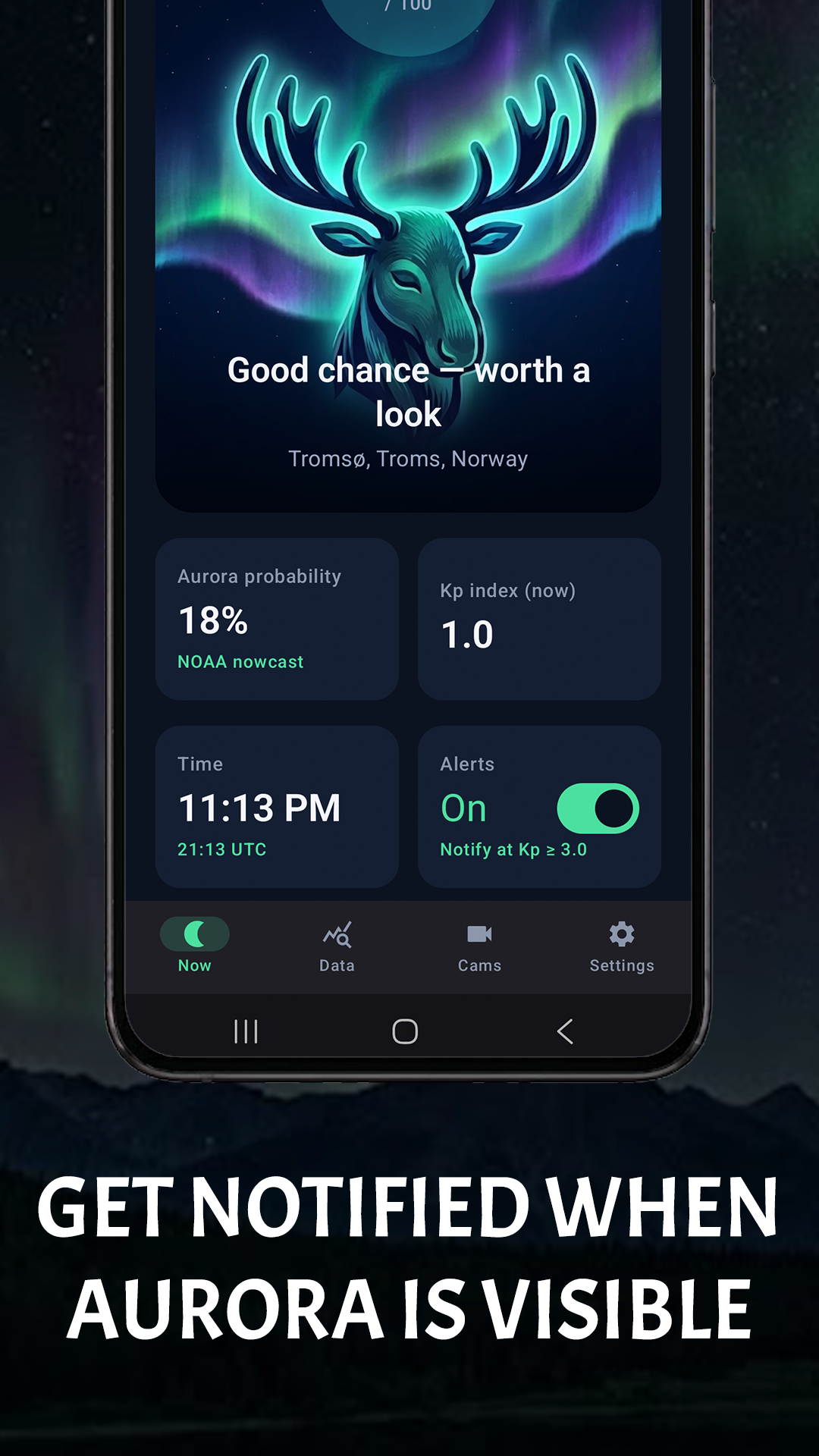
A notification only fires when your sky is actually dark, mostly cloud-free, and geomagnetically active — not just whenever Kp crosses a number.
NOAA's official geomagnetic storm scale, daily, so you can plan a drive north two nights before a major event — not scramble the moment it starts.
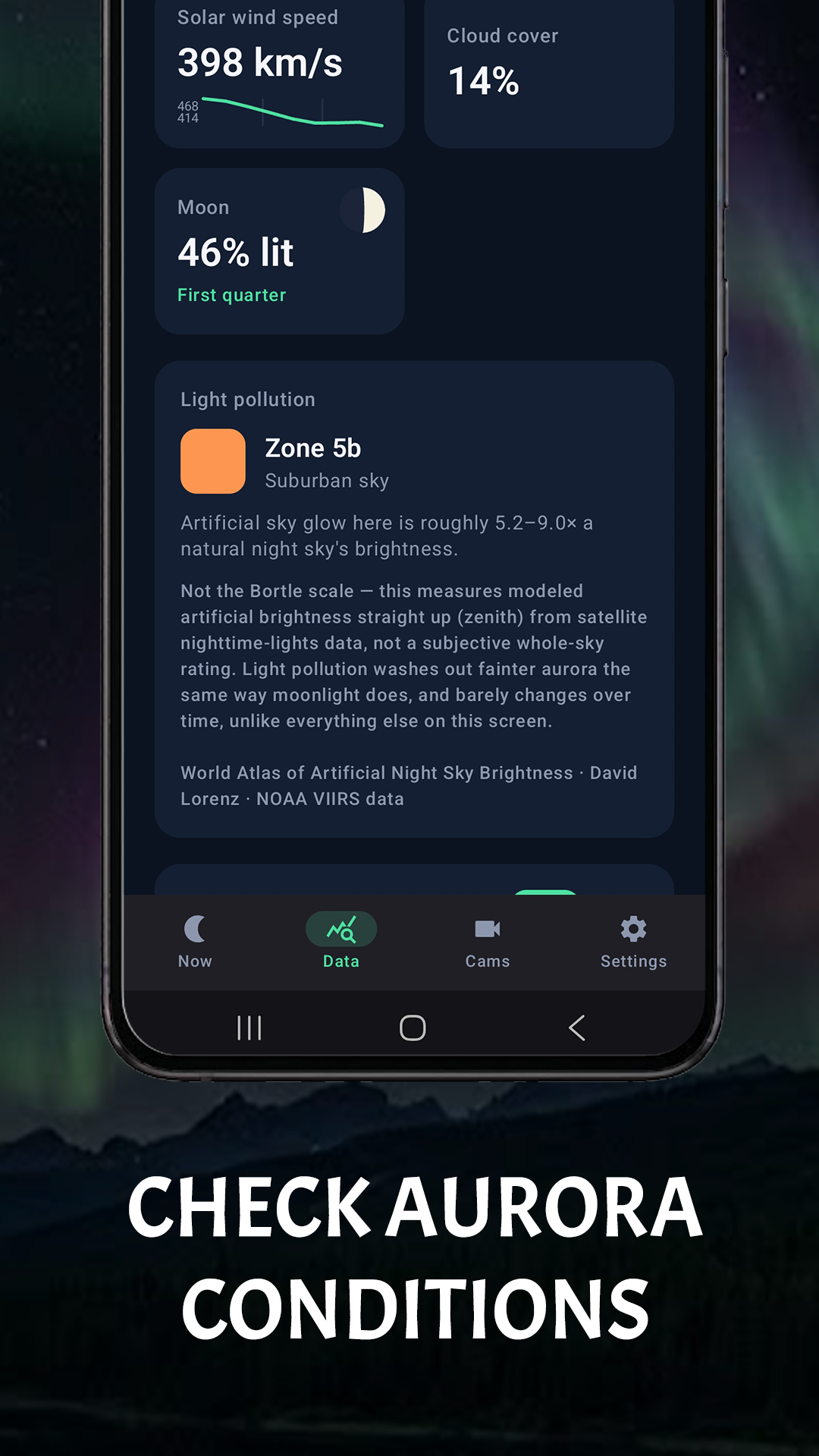
Pulled from the World Atlas of Artificial Night Sky Brightness, so the app knows a clear city sky still won't show you much.
A near-full moon washes out fainter displays — the visibility score quietly accounts for it, up to a 30% trim around full moon.
A separate, fixed-threshold alert for G4+ storms strong enough to reach unusually far south — Germany, the UK, and similar latitudes.
The visibility score starts at NOAA's OVATION probability for your exact spot, then gets discounted for cloud cover and moonlight — the two things that turn "aurora happening" into "aurora you can't see."
The aurora and weather data behind Moose is public, so the app is too — no subscription, no paywalled forecast. Download it and start tracking tonight's sky.
Get it on Google Play